

Mentaiko pasta is one of those dishes that feels effortlessly luxurious despite requiring only a handful of ingredients. The salty roe melts into hot spaghetti, butter, soy sauce, and Parmesan to create a silky, deeply savory sauce that coats every strand of pasta. The best part is that it comes together in around 20 minutes, making it perfect for busy weeknights while still feeling restaurant-worthy.
Mentaiko is salted pollock roe, prized for its delicate pop of texture and rich umami flavor. Although it's now a staple in Japanese cuisine, mentaiko actually traces its roots back to Korea. It was inspired by the Korean dish myeongnan-jeot, a fermented pollock roe delicacy. After being introduced to Japan in the mid-20th century, it evolved into the milder, salted version known today as mentaiko, which quickly became popular as a topping for rice, onigiri, and even toast.
Mentaiko eventually found its way into pasta during Japan's postwar fascination with Western cuisine. The dish is widely believed to have originated in Tokyo, where Italian pasta was adapted to Japanese ingredients and tastes. The result is one of the most iconic examples of wafū (Japanese-style Western) cooking, a simple pasta dish that lets the bold umami of mentaiko shine.
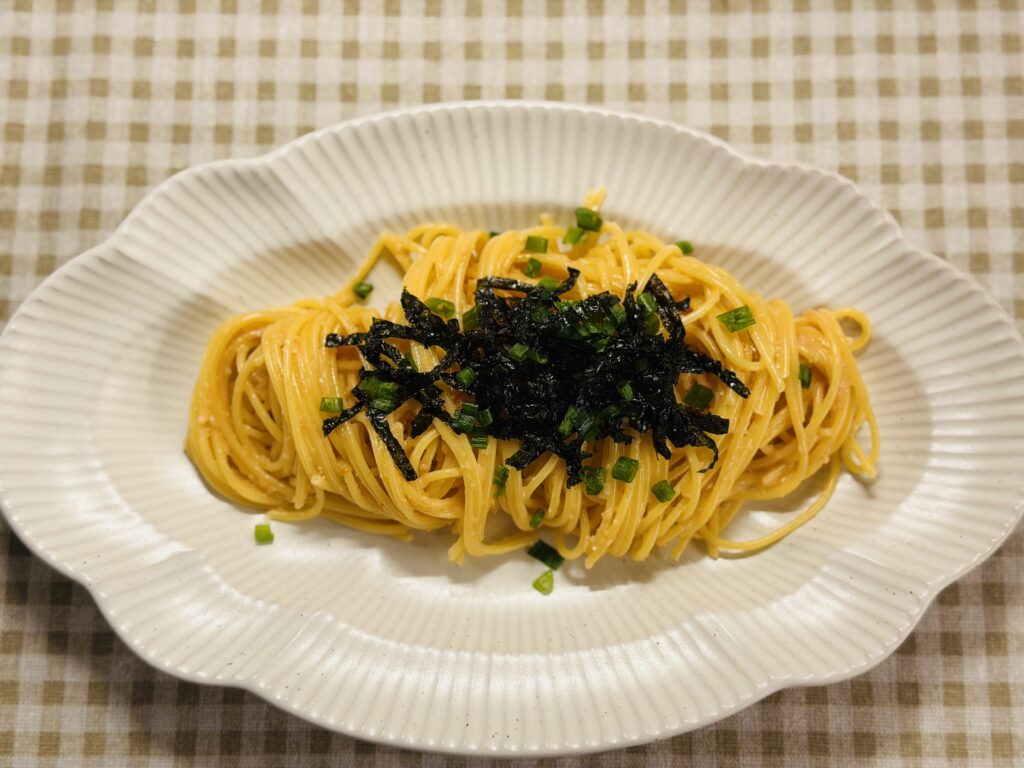
Many mentaiko pasta recipes include heavy cream or milk to create a rich, velvety sauce. While delicious, dairy can sometimes mellow the distinctive flavor of the mentaiko.
In this version, I skip the cream entirely and use freshly grated Parmesan cheese instead. Combined with butter and starchy pasta water, the cheese emulsifies into a creamy sauce without overpowering the roe. The result is a lighter pasta with a more pronounced mentaiko flavor while still delivering all the richness you'd expect from this classic dish.
Using the back of a knife or a spoon, gently scrape the mentaiko out of its membrane and discard the outer skin.
Bring 2 litres of water to a boil and season with 2 tablespoons of salt. Cook the spaghetti according to the package instructions until al dente.
I like to use slightly less water than many recipes recommend because it creates starchier pasta water, which helps emulsify the sauce. Before draining, reserve plenty of the pasta cooking water.
While the pasta cooks, whisk together the mentaiko, softened butter, soy sauce, olive oil, Parmesan cheese, and 3–4 tablespoons of the reserved pasta water.
The mixture will transform into a thick, creamy sauce as the butter and cheese combine with the starch from the pasta water.
Add the cooked spaghetti directly to the sauce and toss until every strand is evenly coated.
If needed, add more reserved pasta water one tablespoon at a time until the sauce reaches your preferred consistency.
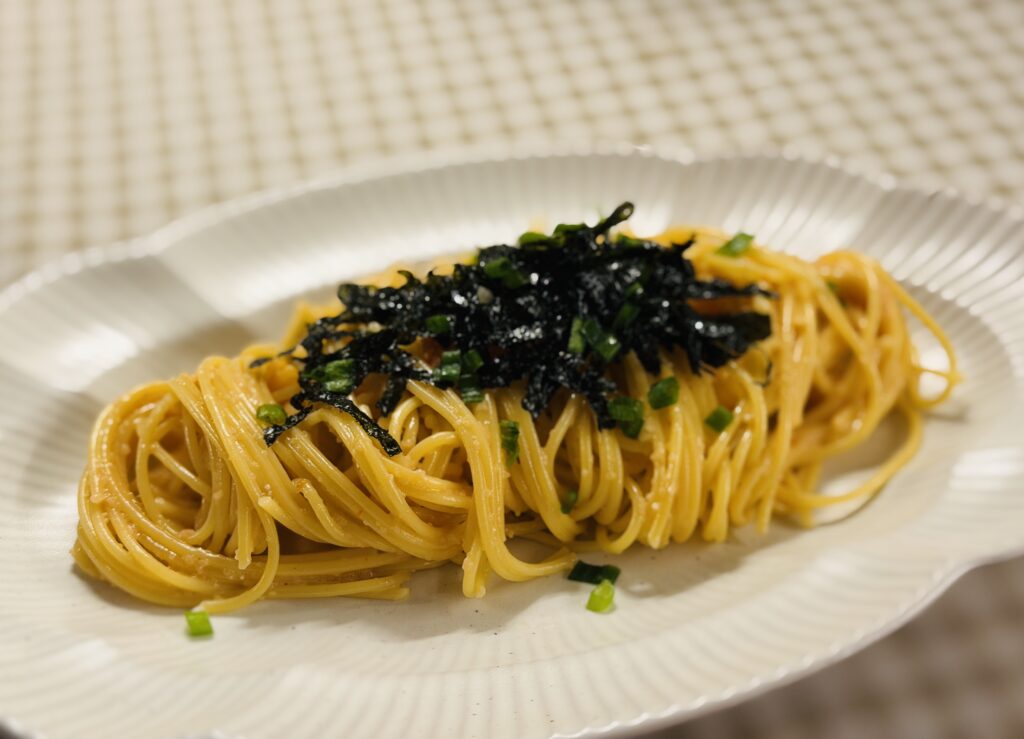
Transfer to serving plates and finish with shredded roasted seaweed and chopped green onions.
Serve immediately while the sauce is silky and glossy.